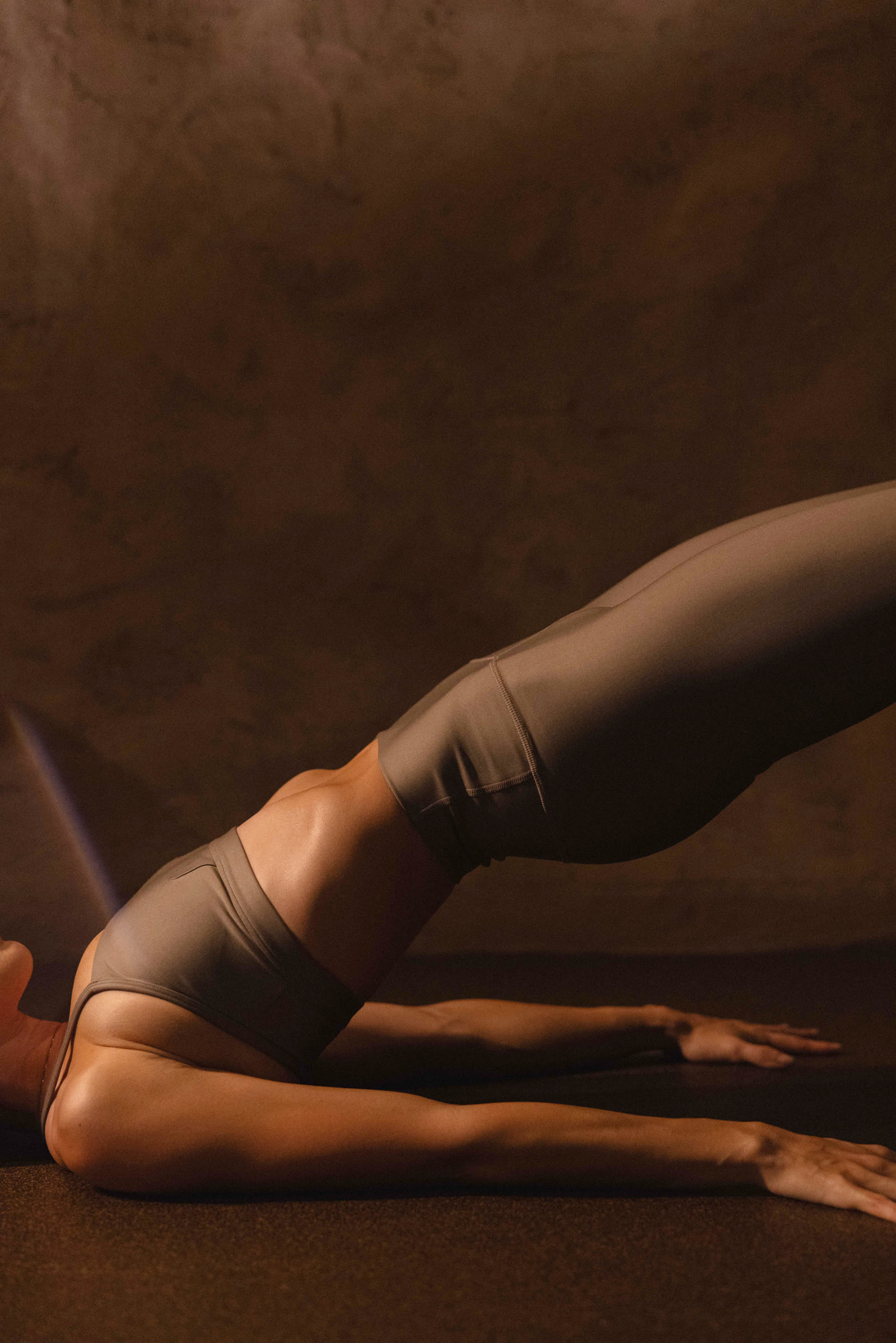
There are two ways the first postpartum workout usually goes wrong. The first is the famous one: too much, too soon — a bootcamp at eight weeks, followed by leaking, doming, and the quiet conclusion that "my body just doesn't work anymore." The second gets less attention but wastes more months: doing nothing at all, because every workout you can find looks like it was written for someone else's body, and nobody ever showed you what starting actually looks like.
So let me show you. This is week one — the actual shape of the first session I give every postpartum member. It takes about fifteen minutes. You can do it in pajamas, on the floor next to a baby doing tummy time. And if your reaction at the end is "that's it?" — good. That reaction is the plan working.
Readiness beats the calendar
First, the gate. Your provider's clearance comes before anything here — especially after a C-section or a complicated delivery. But "cleared" is a starting line, not a green light for everything (that's a whole story of its own — read what your six-week checkup didn't check). Beyond clearance, readiness for this gentle work looks like: bleeding settled or clearly tapering, no worsening pain with daily movement, and the energy to be on the floor for fifteen minutes without it costing you the afternoon.
Notice what's not on that list: a number of weeks. Six weeks, six months, six years — the entry point is the same, because the first job is the same: re-establish the conversation between your breath, your deep core, and your pelvic floor. The further out you are, the faster you'll move through it. But nobody skips it. Skipping it is how symptoms sneak into your training a year later.
Your big muscles feel ready before your deep muscles are. The first workout is for the deep ones.
The session, step by step
Part 01 · 5 minutes
The 360 breath, lying down
This is the workout. Everything else is decoration.
Lie on your back, knees bent, one hand on your chest and one on the side of your ribs. Inhale through your nose and send the air wide — ribs expanding into your hand, front, sides, and back. As the air comes in, let your pelvic floor soften and lengthen, like it's melting toward the floor. Exhale slowly through your mouth and feel everything recoil gently back up.
Eight to ten slow breaths, three rounds. If your chest hand moves first or your shoulders creep toward your ears, slow down — you're re-learning a pattern nine months of pregnancy rearranged. The complete how-to lives in the 360 breath guide.
Part 02 · 4 minutes
Exhale-lift: reconnecting the floor
Coordination, not clenching
Same position. On your next exhale, add a gentle lift — imagine picking up a blueberry with your pelvic floor. (Gentle is the word. This is a skill rep, not a strength rep.) On the inhale, fully let it go — the letting go is half the exercise, and it's the half most women have never trained.
Six lifts, two rounds, full release between each. If you can't feel much, that's normal in the early weeks — the sensation sharpens with practice. If you feel heaviness or bearing down, stop the lifts and stay with the breath; that's information worth bringing to a pelvic floor PT. Why the release matters as much as the lift: Beyond Kegels.
Part 03 · 4 minutes
Position changes: heel slides + bent-knee openings
The breath, under gentle movement
Still on your back. Exhale, gentle lift, and slide one heel along the floor until the leg is long; inhale it back. Alternate — five per side. Then: exhale and let one bent knee fall a few inches out to the side; inhale it home. Five per side.
These look like nothing. They're everything: the first test of whether your deep system can stay coordinated while your limbs move — which is what carrying, lifting, and eventually deadlifting actually demand. Watch your belly: if a ridge appears down your midline, make the movement smaller and the exhale longer (that ridge explained: coning and doming).
Part 04 · 2 minutes
Close: side-lying rest
Yes, this is part of the workout
Roll to your side, head supported, and take five slow 360 breaths. Postpartum bodies are living in a stress bath of no sleep and constant demand; ending with two calm minutes teaches your nervous system that training is a deposit, not another withdrawal.
The whole week one
Do this session three times this week
- Three sessions, not seven — recovery days are when the reconnection consolidates.
- Same session each time. Boring is correct. You're laying wiring, not chasing variety.
- Walk on the other days if you feel up to it — short, flat, unhurried.
- Scale-back signals: pain, increased bleeding, pelvic heaviness, leaking, or coning that won't soften. Persisting symptoms → provider or pelvic floor PT.
This is the exact shape of Week 1 · Reconnect in The Rebuild — in the app it's guided, timed, and followed by eleven more weeks that each build on the last.
What week two (and beyond) adds
Once this feels smooth — usually one to two weeks — the progression adds positions with more demand: bridges, side-lying work, hands-and-knees, then kneeling and standing, then load. The principle the whole way: the deep system leads, and the big muscles follow. By phase three you're doing what looks like a real workout again — because by then it is one, built on a foundation instead of on top of a leak.
What you should not do next: jump from this to a HIIT class because week one felt easy. It felt easy because it was scaled to your connective tissue, not your cardio fitness — those recover on very different timelines. The impatience is normal. Honor it with progression, not with skipping.
Week one is free. And now you've already seen it.
The Rebuild takes it from here — 12 weeks, three phases, every session guided. Reconnect, rebuild, reinforce.
Start Week OneQuestions I get about the first workout
When can I actually start?
Gentle breath work can often begin in the early weeks with your provider's blessing — it's less demanding than a walk around the block. Everything else waits for clearance, especially after a C-section or complicated delivery. Readiness signs beat calendar dates.
Shouldn't a workout make me sweat?
Eventually, absolutely. But session one is a coordination session, and coordination is trained calm. If your first workout back leaves you dripping, it skipped the step everything else depends on.
What if I feel nothing during the pelvic floor work?
Common, especially early. Sensation returns with practice as the nerves and tissue recover. Keep the reps gentle and consistent. If numbness persists or you have heaviness or leaking, add a pelvic floor PT to your team.
I'm two years postpartum. Really — this same session?
Really. You'll likely clear it in days instead of weeks, but the reconnection step is the entry point at any distance from delivery. "Postpartum" is a permanent state of the body, not a six-week window.
Em is a prenatal and postpartum fitness specialist and the founder of motherbuilt. She teaches technique-first programs covering pregnancy (weeks 1–40) and the postpartum rebuild. Find her on Instagram at @birthreadymama.