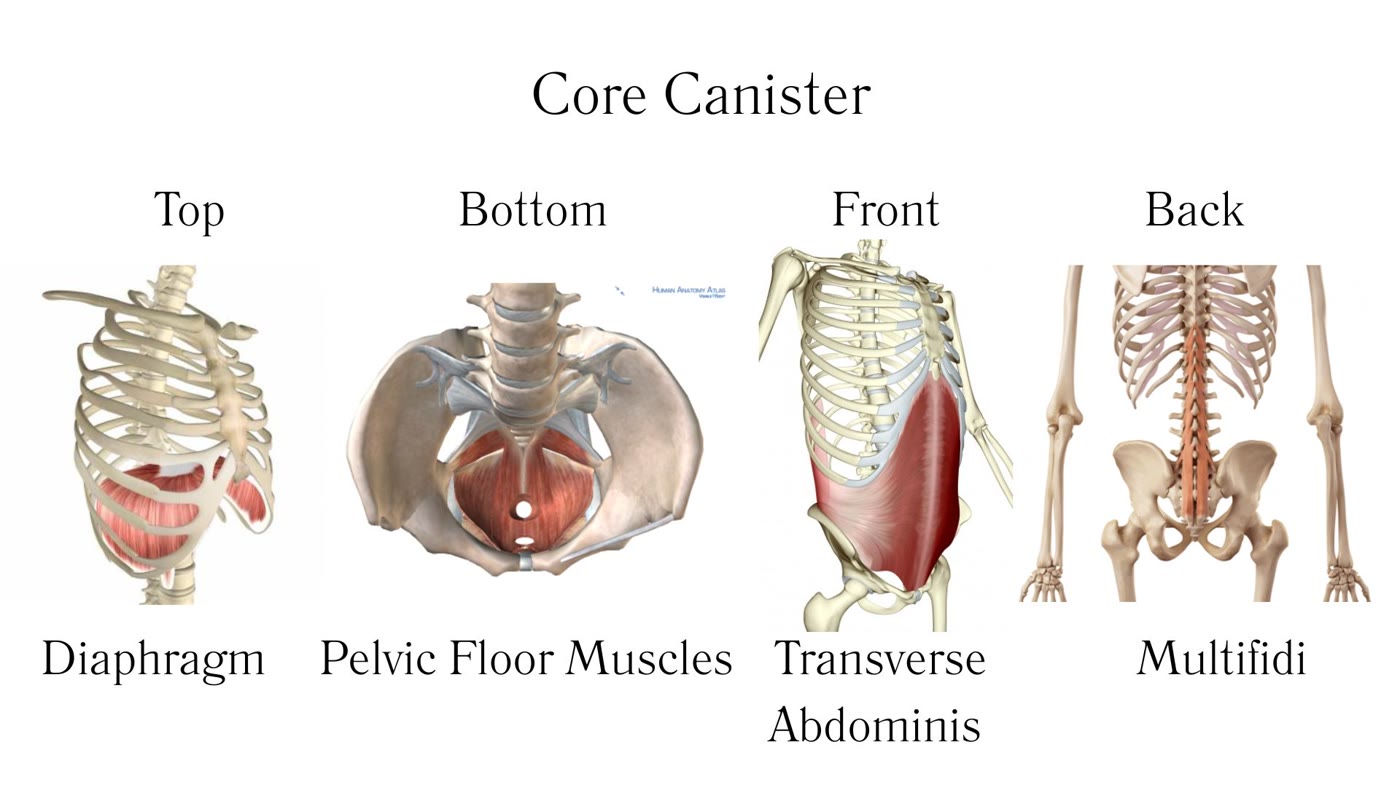
Type "diastasis recti exercises" into any search bar and you'll get two piles of results: worship lists ("the 7 healing exercises!") and fear lists ("NEVER do these 12 moves!"). Both piles make the same mistake — they treat exercises as inherently good or bad, like foods on a diet. Your midline doesn't work that way.
Here's the frame that actually serves you: an exercise is inappropriate for diastasis when it creates more pressure than your system can currently manage — and appropriate the moment your management catches up. A plank at four weeks postpartum and a plank at four months can be two completely different events in the same body. The exercise didn't change. Your capacity did.
So this is a swap list, not a banned list. Every "hold off" below comes with what to do instead — the version that trains the same quality at a pressure your midline can win against — and, more importantly, with the test that tells you when to bring the original back. (If you want the full mechanics of what diastasis actually is, start with why the gap matters less than the tension and what coning is telling you.)
The avoid list is a phase, not a personality. The goal was always to graduate from it.
How to read your own midline (the only test that travels)
Before the swaps, learn the signal — because lists can't know your body, but your body reports in real time. During any exercise, watch and feel the center line of your belly:
- Coning or doming — a ridge rising along your midline means pressure is winning against tissue. Today's version of this exercise is too much.
- Bearing down — pressure pushing down into your pelvic floor (heaviness, or that "about to leak" feeling) is the same verdict from below.
- Breath-holding to survive the rep — if you can't exhale through the effort, you're managing the load with a pressure spike instead of with your deep system.
Any of the three → make it smaller: reduce the lever, lighten the load, elevate the incline, or lengthen the exhale. No drama, no failure — just information. Retest in two or three weeks.
The swap list
Swap 01
Crunches & sit-ups
Hold off when
You cone on the way up, or you're in the early rebuild phase and haven't retrained pressure yet. Spinal flexion under load is exactly the direction that bulges an unprepared midline.
Do instead
Heel slides and exhale-lifts first, then head-lift progressions — exhale, gentle lift of just the head, watching the midline stay flat. That IS a crunch progression; it's just honest about the starting point.
Graduation test: you can curl head and shoulder blades up on an exhale with a flat midline. Crunches are back on the menu — they're actually a fine tissue-loading tool later in recovery.
Swap 02
Front planks (full length)
Hold off when
Gravity pulling your belly toward the floor produces a dome, or you can't breathe normally in the position. A long-lever plank is one of the highest passive pressure demands there is.
Do instead
Incline planks — hands on a counter or couch back. Same skill, adjustable pressure: the more upright, the easier. Progress by lowering the incline, not by gutting out the floor version.
Graduation test: 20–30 seconds at a low incline, breathing continuously, midline flat. Then knees-down floor planks, then full planks.
Swap 03
Double leg lowers & hanging leg raises
Hold off when
Two long legs is an enormous lever. If your low back arches off the floor or the midline cones, your deep system is being out-muscled by the load.
Do instead
Single heel slides → single leg lifts → bent-knee alternating lowers, exhaling on the hard part every rep. One leg at a time is the same exercise at half the price.
Graduation test: bent-knee alternating lowers with a quiet low back and flat midline for 10 slow reps. (Full mechanics: stop pressing your back into the floor.)
Swap 04
Heavy lifting with breath-holding
Hold off when
It's not the barbell that's the problem — it's the held-breath strategy (bearing down hard against a closed throat), which spikes pressure against a midline that can't yet match it.
Do instead
Same lifts, lighter, on an exhale — exhale through the sticking point, midline tensioned not domed. Load is medicine for healing tissue when the dose is right. Build the dose.
Graduation test: progressive — as loads climb, the exhale strategy keeps working. Advanced lifters reintroduce breath-holding strategies gradually, ideally with a coach or pelvic floor PT in the loop.
Swap 05
High-impact work (running, jumping, HIIT)
Hold off when
Impact multiplies pressure demands with every landing. Early on, that repetitive spike goes somewhere — usually into leaking, heaviness, or a midline that won't calm down.
Do instead
Walking, incline walking, low-impact strength — and rebuild the spring with calf raises, marching, and hops-in-place before real running.
Graduation test: the full checklist lives in the return to running guide — it's a readiness decision, not a calendar one.
The pattern you've probably noticed
Every swap is the same move: shrink the pressure demand until your system wins, then grow it on purpose. That's not a restriction philosophy — it's literally how progressive training works for every athlete on earth. Diastasis recovery is just progressive training with the honesty turned up.
What to do every day (regardless of phase)
Try this · the daily floor
The non-negotiables that rebuild tension
- The 360 breath — 3 minutes. Pressure management is a breath skill before it's an ab skill (full guide).
- Exhale-lift coordination — 2 minutes. Pelvic floor and deep abs responding to the exhale, releasing on the inhale.
- One position drill — heel slides, bridges, or bird-dog progressions, exhaling through every effort, midline watched.
This is the spine of Phase 1–2 of The Rebuild — in the app it's sequenced week by week so you never have to guess when to progress.
When it's more than training
Honesty section: training resolves or dramatically improves most functional diastasis issues, and the research is on tension's side — but not every case. If your midline shows no change after months of consistent, well-progressed work, if you have pain, or if there's a bulge that behaves differently than muscle (worth ruling out a hernia), bring in your provider and a pelvic floor physical therapist. And surgical repair is a legitimate option some women choose after conservative care — that's a medical decision, not a fitness failure.
Never guess "am I ready?" again.
The Rebuild sequences all of this — 12 weeks, three phases, each exercise arriving exactly when your system can win against it. First week free.
Start Week OneQuestions I get about diastasis and exercise
Are crunches bad forever?
No — inappropriate early, useful later. Once you can flex your trunk with a flat midline, crunches become a legitimate way to load and strengthen the healing tissue. The internet's permanent crunch-ban is fear dressed up as caution.
How do I know if a specific exercise is okay for me?
Watch the midline, feel the floor. Coning, bearing down, or needing to hold your breath = today's version is too big. Flat, breathing, controlled = you're training, not straining. Your body's report beats any list, including this one.
Can I lift weights with diastasis?
In most cases yes — with exhale strategies and loads your system currently manages. Progressive load is part of the cure, not the enemy. Severe symptoms or no progress → add a pelvic floor PT to the team.
Will my gap ever fully close?
Some close completely, some narrow, some stay wider but become fully functional — strong, flat under load, symptom-free. Function is the goal the research supports chasing; the finger-width number is the least interesting thing about your core.
Em is a prenatal and postpartum fitness specialist and the founder of motherbuilt. She teaches technique-first programs covering pregnancy (weeks 1–40) and the postpartum rebuild. Find her on Instagram at @birthreadymama.