First, a reframe that changes everything: if you were pregnant to term, you had diastasis recti. Not "might have had" — had. By the third trimester, essentially 100% of pregnant women have a widened midline, because that is literally how a body makes room for a full-grown baby. Diastasis isn't your abs failing. It's your abs cooperating.
The real question was never "do I have it?" It's "is mine resolving, and is my core functional?" — and that's where the finger-counting culture leads people badly astray. Let's go through what diastasis actually is, how to check yours properly (most people do it wrong), and why chasing tension beats chasing closure.
What diastasis recti actually is
Your "six-pack" muscles (rectus abdominis) run in two vertical halves, left and right. Joining them down the middle is the linea alba — not a muscle, but a seam of woven connective tissue, like the zipper line of a very sturdy jacket. During pregnancy, hormones make this tissue more pliable and the growing uterus stretches it sideways. The two muscle halves move apart; the seam gets wider and thinner.
After birth, the tissue gradually re-tensions and the halves drift back toward each other. Research following women across the first postpartum year (Mota et al., 2015, among others) shows most of the natural narrowing happens in the early months, and that a meaningful number of women still measure a separation at six months and beyond. If that's you: you are not behind, and you are not broken. You're in the range the research documents — and unlike the tissue's width, its function responds to training at any point.
The problem with counting fingers
The standard self-check measures the gap in finger-widths, and the internet decided that number is a verdict. Here's what the finger-count misses:
Width isn't function. Clinical thinking on this — physiotherapist Diane Lee's work is the classic reference — has shifted from "how wide is the gap?" to "can the linea alba generate tension?" A midline that's three fingers wide but firms up like a trampoline when you engage is often more functional than a midline that's one finger wide but stays soft and unresponsive under effort. Tension is what transfers force between the two halves of your abdominal wall. Tension is what stops coning. Tension is the thing you can train.
Some width can be permanent — and fine. For some women, especially after multiple pregnancies or twins, the midline never returns to its exact original width. If it can tension well, that wider-but-functional midline supports lifting, running, and real life without symptoms. "Close the gap completely" is the wrong goal for that body — "build a midline that can do its job" is achievable for virtually everyone.
Stop asking "how many fingers?" Start asking "what happens under my fingers when I engage?"
Try This — The proper self-check
Check width AND tension
- Lie on your back, knees bent, feet flat. Relax your belly completely.
- Place two fingers horizontally just above your belly button, pressing gently down into the midline.
- Width: lift your head (just your head — this isn't a crunch) and feel the two muscular walls close in on your fingers from the sides. Note roughly how many fingers fit between them. Check again 2–3 inches above and below the belly button — the width often differs along the line.
- Tension (the part everyone skips): lower your head back down. Now take a slow exhale and gently engage — think of the light corset tension from a 360 breath, or a gentle pelvic floor lift. Feel what happens under your fingers: does the tissue push your fingers up and feel springy and firm? Or do your fingers keep sinking as if into soft dough?
- Repeat the head lift with that exhale-engage first, and compare. Firmer? That's your system working — and trainable proof it can improve.
Check once every few weeks, not every day. Tissue changes on a timescale of weeks; daily measuring only feeds anxiety, and anxiety has never closed a gap.
How to actually train it
If tension is the goal, the training plan writes itself — and it looks nothing like the "100 crunches or total avoidance" binary the internet offers.
1. Pressure strategy before everything
The linea alba lives inside your pressure canister. If every exertion spikes pressure outward against the seam (breath-holding, bearing down, ribs flared), no amount of exercise will help — you're loading the tissue in the wrong direction all day. Step one is the exhale-before-effort pattern and 360 breathing. This is Weeks 1–4 of my postpartum program, and it's non-negotiable, boring, and quietly the whole game.
2. Load the midline progressively
Connective tissue adapts to load — that's not just true of muscle. Research on exercise and diastasis supports progressive deep-core training: think heel slides, deadbugs with the exhale leading, side planks scaled to your level, carries, and rotation work as you advance. The dose matters: enough load to stimulate adaptation, not so much that your midline cones and your strategy collapses. Your cone is the gauge — watch for a ridge or mound rising along the midline as your signal to scale back.
3. Bring back flexion — yes, eventually crunches
For years, crunches were treated as diastasis poison. Current thinking is more nuanced: flexion isn't inherently harmful, it was just prescribed too early, without the pressure strategy underneath. Interestingly, curl-ups performed well actually narrow the gap in the moment and, trained progressively, build exactly the kind of midline capacity daily life demands (you sit up out of bed every single day). In my programming they return in the later phases, exhale-led, once the foundation holds.
What about binders, tape, and "diastasis-safe" lists?
Gentle support garments in early postpartum can feel great and help you move more — think of them as a comfortable reminder, not a corrective device. What passive compression cannot do is teach your system to generate its own tension, and cinching aggressively can push pressure downward onto your pelvic floor (which has its own recovery going on — more on that here).
As for the viral lists of forbidden exercises: any list that bans movements for everyone forever misunderstands the problem. The same plank is destructive for one woman's midline in month two and perfectly productive in month five. The variable isn't the exercise — it's whether your pressure strategy and tissue capacity can meet it yet.
When to see a professional
I'm a fitness specialist, not a physical therapist or surgeon. See a pelvic floor PT if: your gap feels very wide or you can sink several knuckles deep with no tension response after weeks of consistent work; you have doming that won't respond to modification; pain; or any bulge that looks or feels different from soft tissue (hernias need clinical assessment). For a small subset of women with severe, symptomatic diastasis that hasn't responded to quality conservative training, surgical repair is a legitimate option — and going into that conversation with months of good training behind you improves both the decision and the recovery.
FAQ
How do I know if my diastasis is "bad"?
Function over width: can you generate tension under your fingers, and are you symptom-free in daily life (no coning during ordinary tasks, no back pain pattern, no bulging)? A wide-but-responsive midline is generally in better shape than a narrow-but-unresponsive one. When in doubt, one assessment with a pelvic floor PT beats a hundred self-checks.
Can diastasis recti heal years after pregnancy?
The tissue is most rapidly changing in the first months, but trainability doesn't expire. Women years — even decades — postpartum improve tension, symptoms, and function with progressive training. The early window is a head start, not a deadline.
Do I need to close the gap completely?
No. Complete closure is neither guaranteed nor necessary. The goal is a midline that transfers force and handles your life without symptoms. Many strong, high-performing moms carry a residual finger-width or two, functionally irrelevant.
Will ab exercises make my diastasis worse?
Poorly-strategized ones can (breath held, coning ignored, too much too soon). Well-sequenced ones are precisely how it improves. The exercise isn't the risk — the strategy is.
Can I prevent diastasis in my next pregnancy?
You can't prevent the widening — that's the design. What you can do is enter pregnancy with a well-trained pressure system, manage pressure well throughout (this is the heart of the Birth Ready trimester programs), and give yourself a smoother re-tensioning afterward.
Train the tension, not the tape measure.
The 12-week Rebuild program retrains your pressure system in the order that works — and tells you exactly when planks and crunches come back. First week free.
Start Week One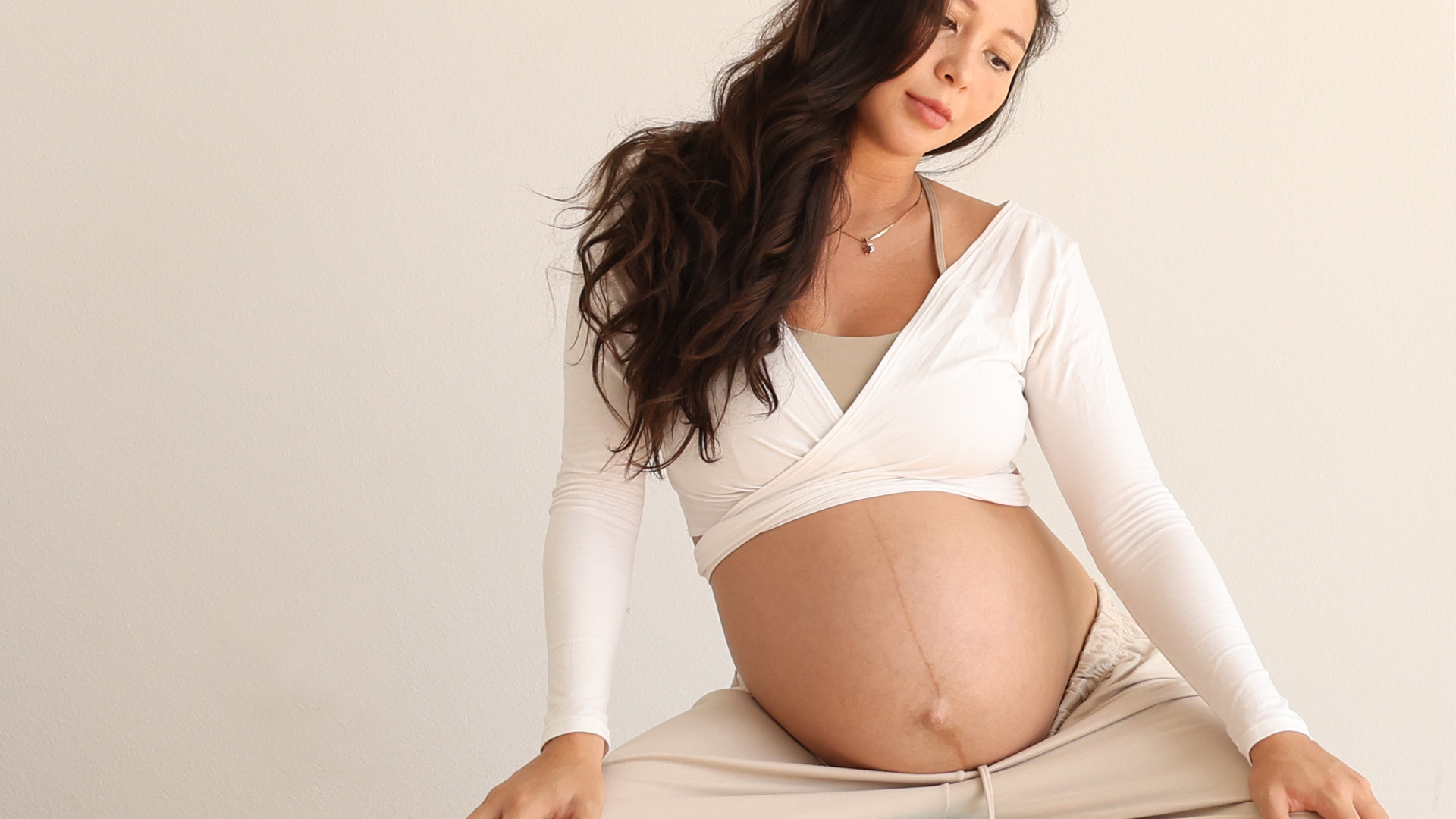
Em is a prenatal and postpartum fitness specialist and the founder of motherbuilt. She teaches technique-first programs covering pregnancy (weeks 1–40) and the postpartum rebuild. Find her on Instagram at @birthreadymama.