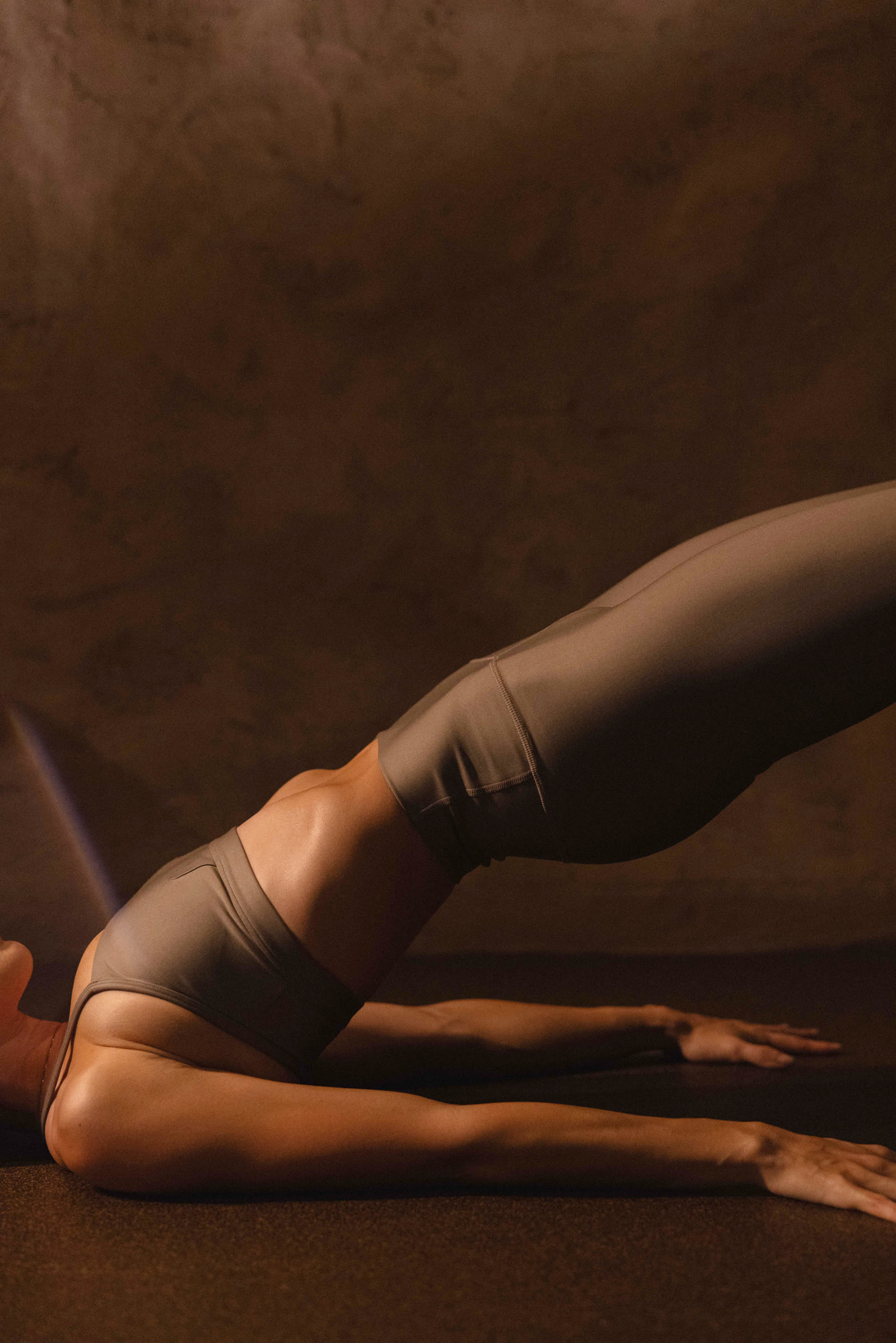
The Rebuild · Postpartum
A 12-week program that rebuilds your deep core and pelvic floor in the right order, so strength gets built on a foundation, not on top of a leak.
Em — Founder & Trainer, motherbuiltSound familiar?
Kegels alone aren't the answer, coordination is. The lengthen and the lift, trained from week one.
→ Beyond KegelsA pressure system asking for retraining before you load harder. It's data, not damage.
→ Diastasis Recti, ExplainedRib flare, your ribcage made room for a baby and got stuck mid-inhale. It's trainable.
→ Fix Your Rib FlareGlutes switched off by months of waddle and tuck. Position, activation, rotation, load, in order.
→ Fix Your "Mom Butt"Why "bounce back" backfires
Your big muscles feel ready before your deep muscles are. Crunches and bootcamps at 8 weeks postpartum load a pressure system that hasn't been rebuilt, and that's how leaking, doming, and heaviness get worse, not better.
"Just do kegels" skips the actual skill. A pelvic floor needs to lengthen, lift, and coordinate with your breath, not just squeeze. Squeezing a tense floor can make symptoms worse.
Random workouts can't rebuild a system. Recovery follows a sequence: reconnect, then load, then integrate. The Rebuild is built in that order, week by week, so you never have to guess what's safe next.
Inside The Rebuild
The 12-week postpartum program unfolds in three phases. Each one unlocks the next, three short sessions a week. (Pregnant? Birth Ready follows the same technique-first approach, structured trimester by trimester instead.)
Weeks 1–4 · Early
Breath, pelvic floor, and deep core wake back up. It won't feel like a workout, that's the point.
Weeks 5–8 · Mid
More load, more upright positions. The deep system integrates with real movement, side body, back line, rotation.
Weeks 9–12 · Late
Functional full-body strength. It starts to feel like working out again, because now your body is ready for it.
Technique first, always
The breath–core–pelvic floor connection every program is built on. Tap each to see how it works.
360° rib expansion — the breath that moves your diaphragm and pelvic floor together as one system, instead of shallow chest or belly breathing.
A gentle lift through the pelvic floor, coordinated with your exhale. Not a clench, a skill you'll use in every lift, carry, and workout.
Deep core stability that wraps and supports your spine and pelvis, so strength gets built on a foundation, not on top of a leak.
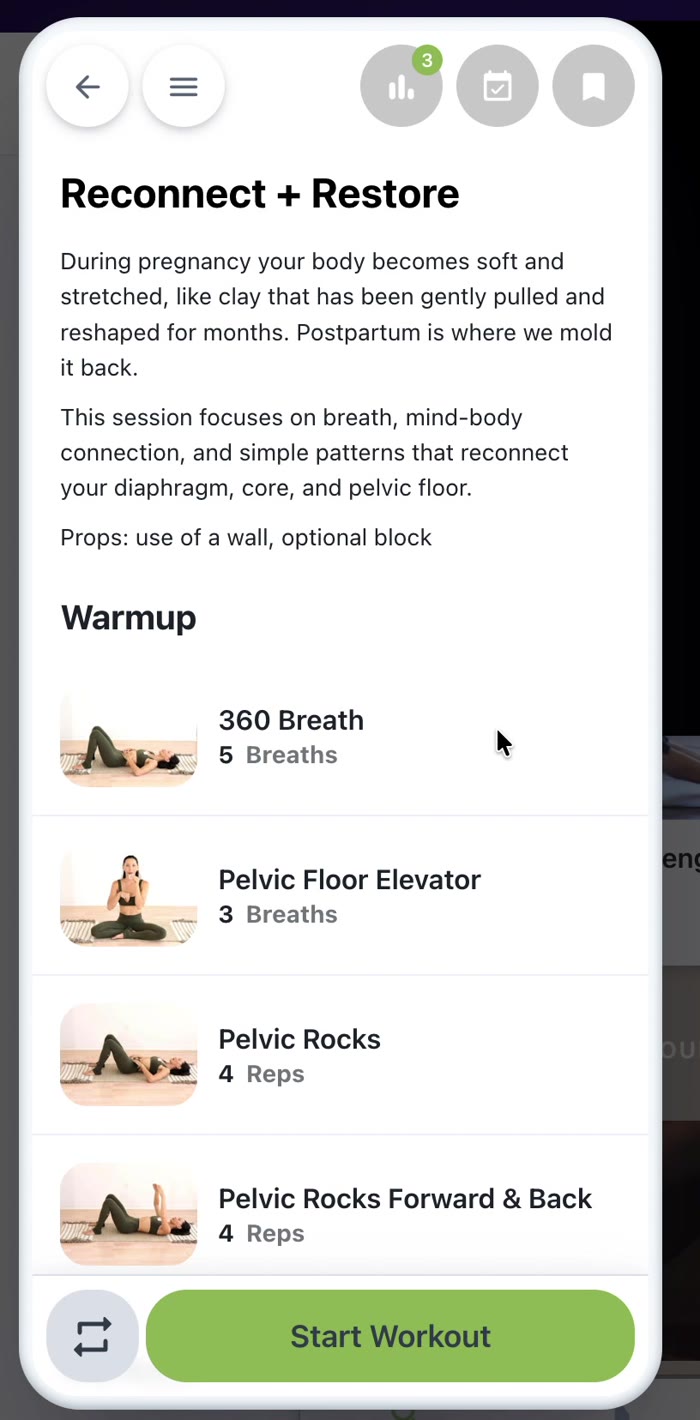
See it in action
The Rebuild · Reconnect + Restore, Week 1
From mamas in the program
"I rushed back into exercise after my first pregnancy and ended up with leaking and back pain. This time, I already feel so much stronger and more connected to my core."Jessica L. · 10 weeks postpartum
"I've taken fitness classes for over 10 years and I've never had someone explain technique and alignment this clearly. I finally understand what I'm supposed to be feeling instead of just copying the movement."Hyun · 10+ years in fitness
Built on research, not trends
Mota et al., 2015 — documented diastasis recti prevalence across the first postpartum year, informing how (and when) we progress core loading.
Diane Lee's clinical work — linea alba tension matters more than gap width. We train pressure management before aesthetics.
British Journal of Sports Medicine review — supports early, progressive pelvic floor and deep-abdominal training. Exactly how weeks 1–4 are structured.
Cochrane review, 138 trials — pelvic floor muscle training is first-line treatment for urinary incontinence. Woven through every phase, not bolted on.
Your first six months postpartum are when tissue is most plastic and responsive. The movement patterns you build now are the ones your body keeps.
Further out than six months? It still works. The window is a head start, not a deadline.
Let's be honest
"I have a newborn. I don't have time to work out."
Sessions are 20–30 minutes, splittable into chunks. Shorter movement snacks are built in for the hardest days.
"Is it safe? It feels too soon."
The early phase is breath and reconnection, gentler than a walk around the block. Your provider's clearance always comes first.
"I'm 8 months, or 8 years, postpartum. Too late?"
No. The same progression works whether your baby is six weeks old or in first grade.
"Another subscription? Really?"
One pelvic floor PT session runs $150–250. This costs less than that for an entire year.
Simple pricing
Monthly
per month · cancel anytime
Annual
per year · $16.58/month
7-day free trial · cancel in two taps · no questions asked
Questions
Week one is gentle breath and reconnection work, but always get the green light from your doctor or midwife first, especially after a complicated delivery or C-section.
No, significant symptoms deserve a pelvic floor PT. This is the structured, daily-practice layer that works alongside clinical care.
In the app, in two taps, anytime. The 7-day trial means a full week of the program before paying anything.
Do week one of the rebuild on us, breath, reconnection, and the first honest step toward a body that's built better, not just back.
Led by Em — built by motherhood, not in spite of it.