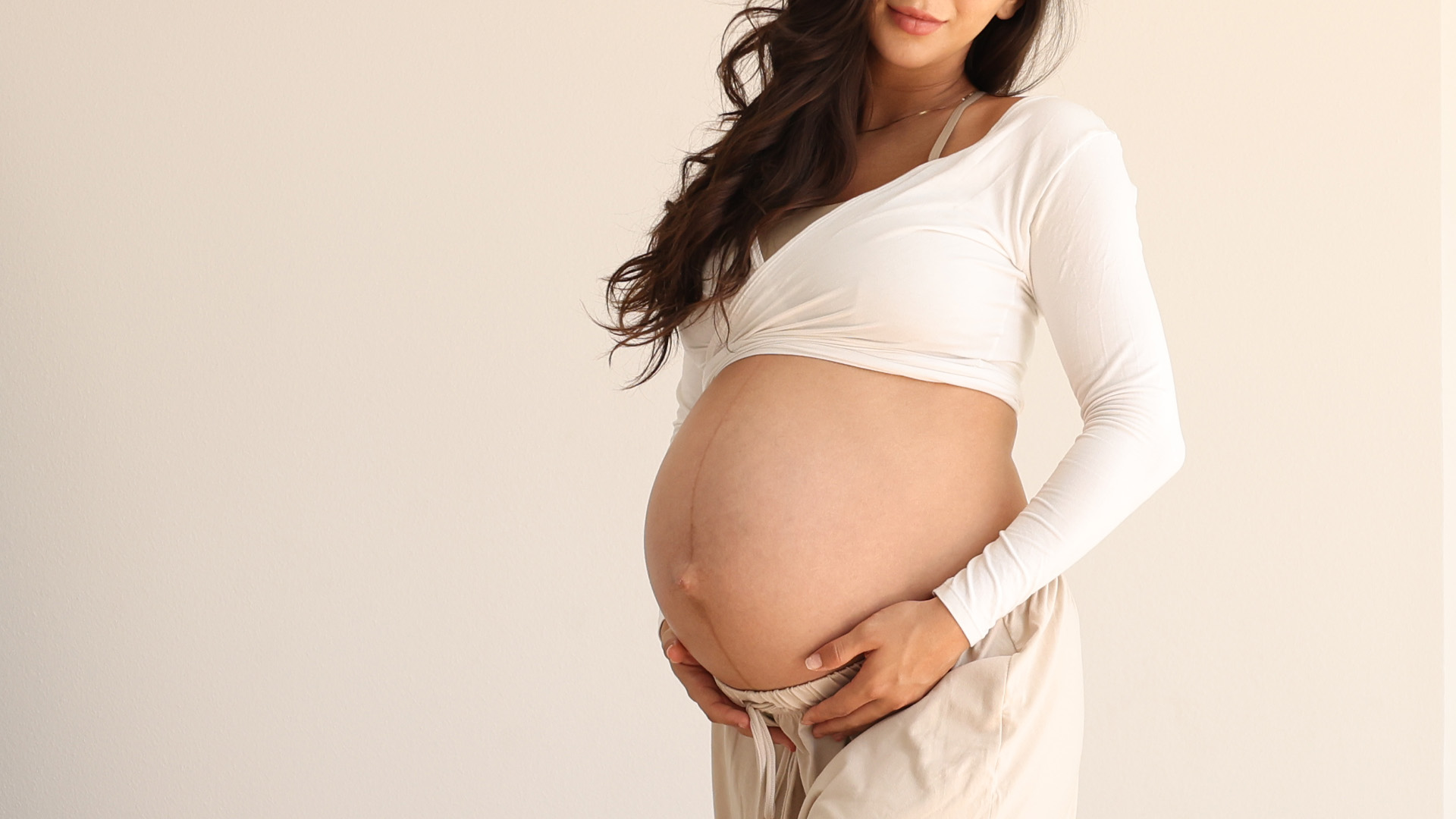
Here's the first-trimester paradox: your belly hasn't changed, your workout clothes all fit, nobody's offering you a seat on the train — and you feel worse than you will at eight months pregnant.
That mismatch makes so many women feel like they're failing at pregnancy fitness before it's even started. So let's start with what's actually happening in there, because once you understand the biology, the exhaustion stops feeling like weakness and starts looking like exactly what it is: evidence of enormous work.
Why you feel like this
The first trimester is a hormonal surge unlike anything else your body does. Progesterone and hCG flood your system — driving the mood swings, nausea, bloating, and bone-deep fatigue. Roughly 8 out of 10 women experience first-trimester nausea. You are decidedly not alone, and it isn't a sign anything is wrong.
Meanwhile, your body is beginning one of its biggest projects: expanding your blood volume by up to 50%. Your blood vessels dilate to prepare for it — which is why dizziness and headaches show up in these weeks. You're literally manufacturing a bigger circulatory system while growing a placenta. Of course you're tired.
The good news built into this: for most women, relief comes in the second trimester, when hormones stabilize and blood volume catches up. This phase is real, and it's also temporary.
You don't look pregnant yet. Your body is working as if it's running a marathon anyway. Train accordingly.
What doesn't change yet
Here's the part that surprises people: mechanically, not much needs modifying in the first trimester. Your belly isn't yet displacing your organs, your center of gravity hasn't shifted, and there aren't drastic changes to your movement patterns. Most exercises you did before pregnancy are still on the table (with your provider's okay — always have that conversation early).
What changes is the energy budget — and the opportunity. Because your body is about to spend nine months progressively loading your core and pelvic floor, the first trimester is the ideal moment to build the skills you'll lean on later, while everything still feels familiar.
What to actually train (and why)
These are the priorities I build into the Trimester 1 program — each one is an investment that pays off in a later trimester or postpartum:
- Breath and pressure management first. The 360 breath and the exhale-before-effort habit. This matters extra if this isn't your first pregnancy, or you have a history of pelvic floor symptoms or diastasis — the earlier the strategy is installed, the better your system handles the load to come.
- Posterior chain strength — glutes, hamstrings, back line. Your posture is about to be pulled forward for months; the muscles that hold you upright (and support your pelvic floor) get strong now. Bridges, hinges, light deadlifts.
- Hip stability. Relaxin will progressively loosen your ligaments; SI joint pain and pubic bone pain (SPD) are common later. Strong, stable hips are the best insurance — and the research agrees.
- Deep core work — transverse abdominis training that supports your trunk and reduces strain on your midline as it stretches. Not crunches-forever; neutral-pelvis, breath-led work.
- Single-leg (unilateral) work. Balance is about to become a moving target as your center of gravity shifts. Split squats, step-ups, single-leg balance — this also front-loads your postpartum recovery.
- Ribcage and upper-back mobility. Your ribs will expand to make room (the rib flare story starts here). Mobile, well-moving ribs now mean better breathing and less back pain later.
- Pelvic floor coordination — both the lift and the release, from day one. (Why both, here.)
The permission slip
Now the other half — because a plan means nothing in a week when you can't look at food without gagging.
Listen to your body over your program. Some days you'll feel up for movement; some days rest is the training. Be easy on yourself and give yourself lots of grace to veg out. Consistency across the trimester matters; consistency within any single week does not.
Try This — The nauseous-day protocol
Movement that meets you where you are
- Mid-class bailout is built in: in any session, you always have permission to come to the floor — child's pose, side-lying rest, or a psoas release — and just breathe. Rejoining is optional.
- Psoas release for the exhaustion: lie on your back with calves resting on a chair or couch, knees at 90°, and let everything drop for 5–10 minutes of slow breathing. It downregulates your nervous system and eases that deep hip-flexor grip. Too queasy to lie flat? A standing version against the wall works too.
- The 5-minute contract: on bad days, commit to 5 minutes of breath work only. Usually that's what happens. Occasionally you'll feel better and continue. Either result is a win.
- Movement snacks over workouts: two 6-minute sessions count exactly as much as one 12-minute one.
Nausea tip stack (the classics for a reason): eat before you're empty — an empty stomach makes it worse; cold, bland, salty foods tend to sit best; morning crackers before standing up; ginger and vitamin B6 have decent evidence — ask your provider.
When to check in with your provider
Always clear exercise in early pregnancy at your first appointment, and stop and call if you experience bleeding, severe cramping, dizziness that doesn't pass, or anything that feels wrong. First-trimester fatigue is normal; symptoms that scare you deserve a phone call, not a workout.
FAQ
My heart rate spikes so fast now. Is that bad?
It's expected — your cardiovascular system is mid-renovation, so the same effort costs more. Train by feel (you should be able to hold a conversation) rather than by pace or old benchmarks. The old "keep it under 140bpm" rule is outdated; effort-based guidance replaced it.
Can I still do abs in the first trimester?
Yes — and you should, with the emphasis on the deep system rather than max-effort flexion. This is the best trimester to build the TVA strength and breath strategy that protect your midline later. Watch for coning as your pregnancy progresses and modify then.
I've barely worked out in weeks and feel awful about it.
You grew a placenta instead. Truly — the fatigue is your body allocating energy to the single most metabolically demanding project it runs. Restart with breath work and walks when you can. The second-trimester energy return is real, and your program will be waiting.
When should I start prenatal-specific programming?
Now is ideal — not because you need heavy modification yet, but because the skills (breath, pressure, pelvic floor coordination) compound over the months you have left. Starting in trimester 3 works; starting in trimester 1 works better.
Is it safe to lie on my back or belly?
In the first trimester, generally yes to both (comfort permitting). Prone (face-down) positions phase out as the belly grows, and prolonged flat-on-back positions get reassessed later in pregnancy — your program should handle those swaps for you when the time comes.
Twelve weeks of "exactly what to do today."
Birth Ready's Trimester 1 program: 3 short classes a week, built for real first-trimester energy — with full permission to lie down. First week free.
Start Week One
Em is a prenatal and postpartum fitness specialist and the founder of motherbuilt. She teaches technique-first programs covering pregnancy (weeks 1–40) and the postpartum rebuild. Find her on Instagram at @birthreadymama.